



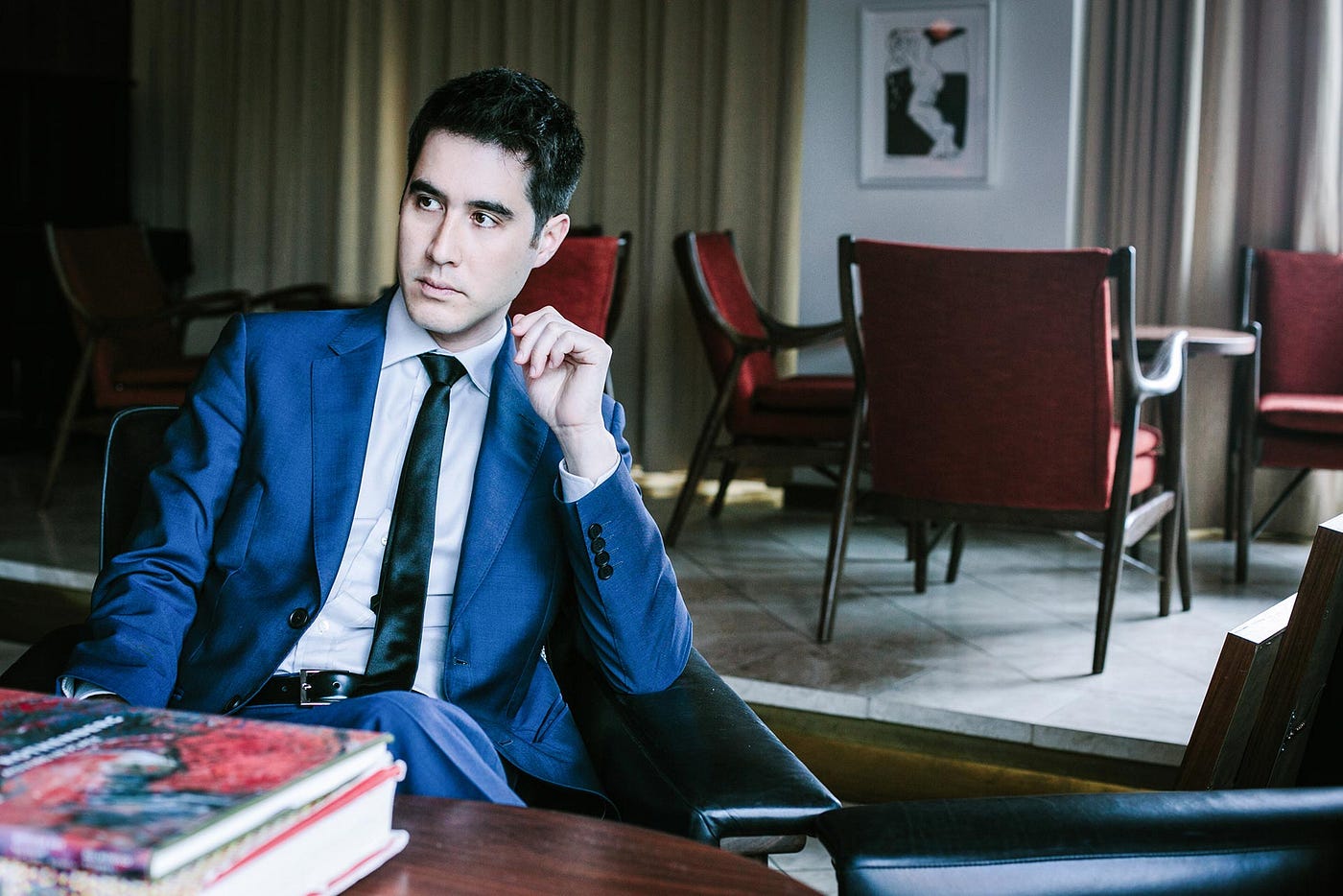
We speak to the famed magician and crossword maker about his new interactive experience
David Kwong is both a well-known magician as well as a cruciverbalist (a fancy word for crossword puzzle designer). He’s graced the stage at TED and his crossword puzzles often make the pages of the New York Times. But this coming January, lucky New Yorkers will have the chance to participate in The Enigmatist, his new experience at the High Line Hotel in Manhattan.
This experience aims to bridge the worlds of escape rooms and stage magic and keep the audience on its toes the whole time; even the trailer for the show contains two puzzles:
We spoke to David over email about puzzles, magic, illusions, and more as he prepares for The Enigmatist.
No Proscenium (NP): Could you tell us a little about yourself and your background?
David Kwong (DK): I’ve been studying sleight of hand and illusion since I was a child. And in my 20’s I became obsessed with puzzles and I started constructing crosswords for the New York Times. But it wasn’t until I was 30 that suddenly I realized I could fuse the two passions together to create a new type of magic. After all, I think that all magic tricks are puzzles. They challenge your brain to figure out the solution.
I’ve also worked on a number of Hollywood productions. I was the head magic consultant for Now You See Me and produced ABC’s Deception, a show about a magician who joins the FBI. I am also the secret code advisor on NBC’s Blindspot. My book Spellbound: Seven Principles of Illusion breaks down the science of how your brain is fooled by illusion.
I’m an active member of the TED community and hid a secret message in the New York Times crossword puzzle the morning of my TED Talk. Enjoy!
NP: What, in a nutshell, is The Enigmatist about?
DK: The Enigmatist is an immersive journey through magic and puzzles. Through puzzles and games that I play with the audience, we will all together unlock the secrets of Riverbank.
The Enigmatist is set in 1915, when Col. George Fabyan created his fantastical estate, Riverbank, outside of Chicago. I think of him as an early twentieth-century Willy Wonka. He had a Japanese garden, an alligator pit, a bear cage, and monkeys and zebras running around the property. He brought an 80-foot light house from the East Coast. Fabyan was obsessed with science and learning, and one of his pet projects was proving that Sir Francis Bacon wrote the works of Shakespeare, and moreover, that Bacon hid a secret code in folios.
So the textile magnate hired Shakespeare scholar Elizebeth Smith to work on the Baconian code. William Friedman, a geneticist, came on to the project as well. The two married, and this code breaking department ended up becoming the governments first cryptology unit, with significant contributions to the World Wars and the NSA. Hence, Riverbank, is known by some scholars as the “cradle of cryptology.”
NP: How did the project come about? What inspired you to make this experience?
DK: I had heard about the Baconian cipher, but I really went down the rabbit hole when did research at the New York Public Library rare books archive. They have a trove of Riverbank materials! As I sifted through those handwritten notes on cryptology I felt like I was getting to know the Friedmans. They were fascinating people with a sense of humor, and we are still discovering clues that they left behind for us!
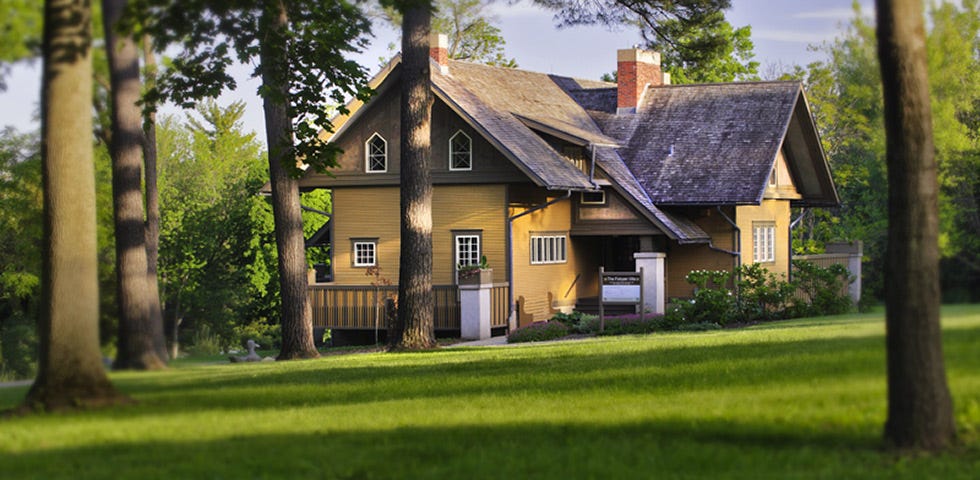
NP: How do you plan to bring the Riverbank Estate to life as part of the show?
Get Kathryn Yu’s stories in your inbox
Join Medium for free to get updates from this writer.
SubscribeSubscribe
DK: The escape room is a puzzle room that brings Fabyan’s estate to life.
Audience members will be handed a map of the property and will have to solve a number of puzzles themed on Riverbank in order to gain entrance to the bar and show room. And the puzzles don’t stop there. The entire performance tests the audience’s ability to think outside the box.
NP: How are you tying together magic and escape rooms in The Enigmatist?
DK: Illusions are puzzles that I hope the audience doesn’t solve — if I’ve done my job right! In the The Enigmatist, I will introduce people to the world of puzzles but then twist things so that some mysteries are left unexplained.
NP: How has your experience making crossword puzzles informed the creation of this show?
DK: Most of my puzzles for the New York Times have have pushed the envelope for what is allowed in the crossword (pats self on back). The puzzle I’m perhaps most proud of is themed around the Universal Studios monster movies. Each creature is reflected in a mirror and its reverse image (the word spelled backwards) appears on the other side of the grid. But at the bottom the solver discovers that Dracula has no reflection and the corresponding area should be left blank. This was printed on Halloween when constructors are allowed to be extra tricky!
The other day for deviousness is April Fool’s Day, on which I’ve also had a puzzle printed. This puzzle tested solvers’ abilities to think outside the box. This puzzle required solvers to write the word “think” literally outside the box, spilling into the margins of the newspaper.
Here’s one more, a puzzle that took me and my friend Kevan about 2.5 years to construct: A Mad Magazine Fold-In puzzle, where the right side folds over to the left to create new words.
What all these puzzles share is my love for misdirection and twists and turns. I write puzzles that make the solver think one thing is going on, when really it is something else. And as Will Shortz, the puzzle editor for the New York Times, says, “A good puzzle makes the solver feel smart.”
My hope is that when solvers have that “aha” moment, they pat themselves on the back for having cracked the code.
NP: How is the audience incorporated into the work? Who is the ideal audience member for this show?
DK: Echoing the above, my goal is to have everyone in the audience come away from The Enigmatist feeling smart and having learned something about the world of puzzles. I’ll teach people the basics about next-level solving, but then add a few twists and turns at the end. People will have a chance to stand up and give answers if they choose, or simply take it all in and enjoy this introduction to puzzling.
The audience is anyone who loves puzzles or wants to learn about them — all ages welcome!
The Enigmatist opens in January 2019 at the High Line Hotel in Chelsea. Tickets are $85–125.
NoPro is a labor of love made possible by our generous Patreon backers. Join them today!
This month we’d also like to thank The Johnny Carson Center for Emerging Media Arts for sponsoring our features.
In addition to the No Proscenium web site, our podcast, and our newsletters, you can find NoPro on Twitter, Facebook, YouTube, Instagram, in the Facebook community Everything Immersive, and on our Slack forum.


Discussion