



Every year the La Jolla Playhouse presents the Without Walls Festival, the most significant non-traditional staging theatre festival on the West Coast, if not the whole of the United States, and every year No Proscenium is there.
(Disclosure: we have a long standing relationship with the Festival now, but the Festival has no editorial input whatsoever.)
Previous years have seen works from Chalk Rep, the out-of-town premiere of the original Brassroots District production, multiple pieces from Mister & Mischief, stunning works from David I. Reynoso of Optika Moderna, and more international pieces than you can shake a 747 at. (Though those who remember the Liberty Station editions of the festival know the planes tried.)
WOW remains a key point in the immersive calendar each year, both introducing new works to the ecosystem and giving a home to well traveled works that have yet to make it to California. This year’s lineup is a heady mix of both, with all new works that are poised to make a splash on the festival circuit and long anticipated arrivals we’ve been reading about all year.
This diary represents our realtime-ish responses to this year’s festival offerings.
– Noah J. Nelson, Publisher
Friday, April 24, 2026
Handle With Care – Ontroerend Goed
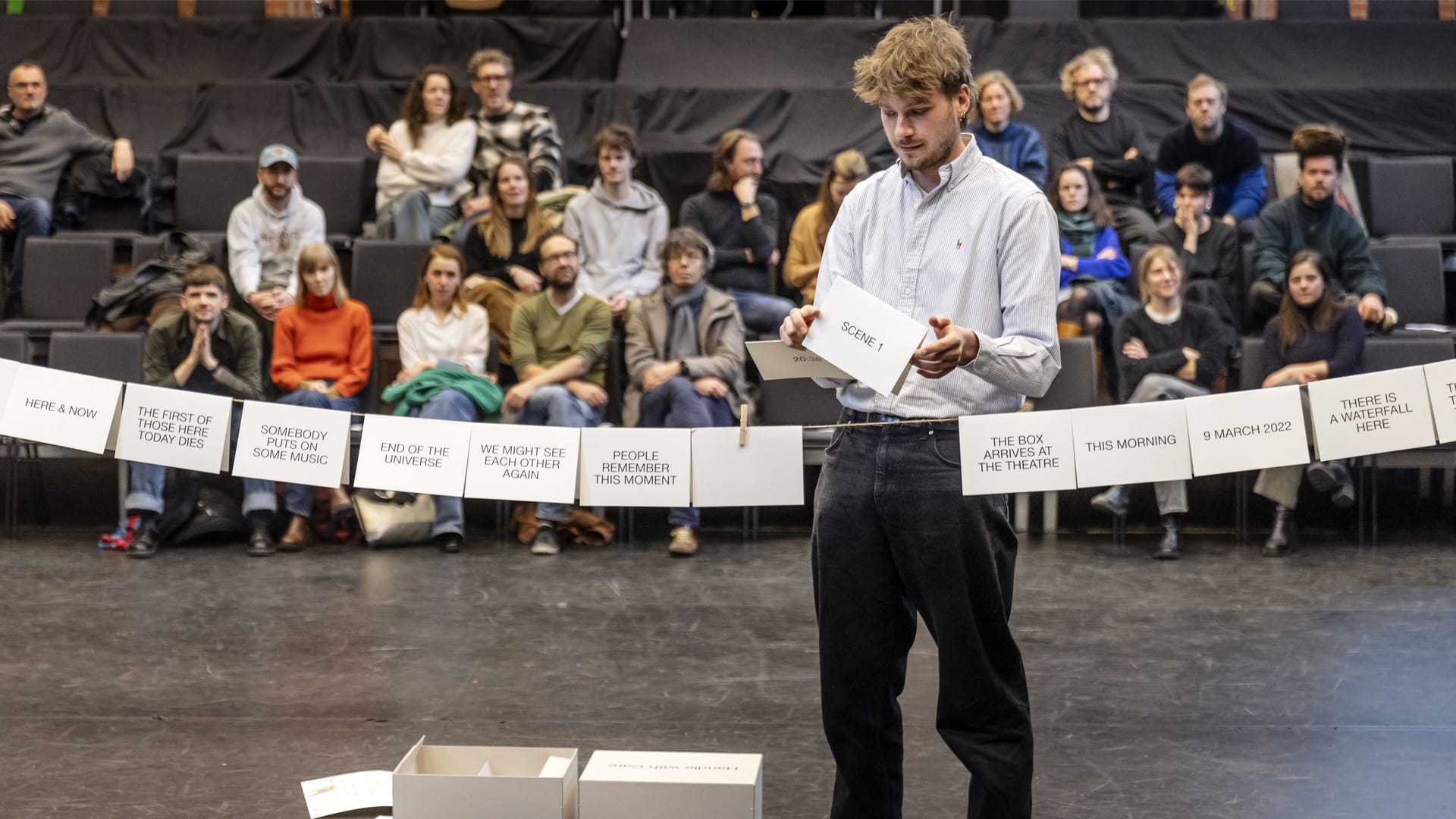
The first thing I thought of as I watched our audience tackle the box marked “Handle With Care” — which is at the heart of the synonymous show — is that this felt like this year’s Burnout Paradise, which was a highlight of last year’s WOW and cultivated a similar kind of anarchic participation energy from the audience.
Only here there were no performers to regulate the flow, just us: a room full of strangers. And a box.
Earlier today the line “Life is a group project” flitted through my head after a particularly good interaction with a shopkeeper I didn’t know, and this looked like it was going to put that premise to the test.
Handle With Care is an entirely experiential piece in that each audience is given a box, which contains a series of tasks of various types, lengths, and complexities. Things can go wrong — sometimes possibly by design, other times very much because shit just happens.
The joy, and the wisdom, of the piece comes from both watching and participating in the group’s effort to accomplish the tasks set before us. For our run a component went missing at a key point. It was unclear if this was a bit or just user error. Blissfully we were able to carry on and complete the task.
At another point an instruction would have left one of the members of the audience out of a collective moment so a great effort was made to reengineer things so that they would not be left out. An elegant solution to the problem was overlooked, which says a lot about perception, problem solving, and momentum in group dynamics.
Of all the types of agency that come into play in immersive experiences, collective agency — wherein the efforts and attention of the whole of the audience are brought into play — is the hardest one to make interesting. It’s also damn near impossible to make it elegant or compelling outside of the immersive gaming part of the field.
Which is what makes Handle With Care so beautiful. It’s pretty much a pure expression of collective agency. A finely detailed illustration of the idea that life is a group project.
Even, maybe even especially, when it doesn’t all go according to plan.
— Noah J. Nelson
Karaoke Dreams — Blindspot Collective
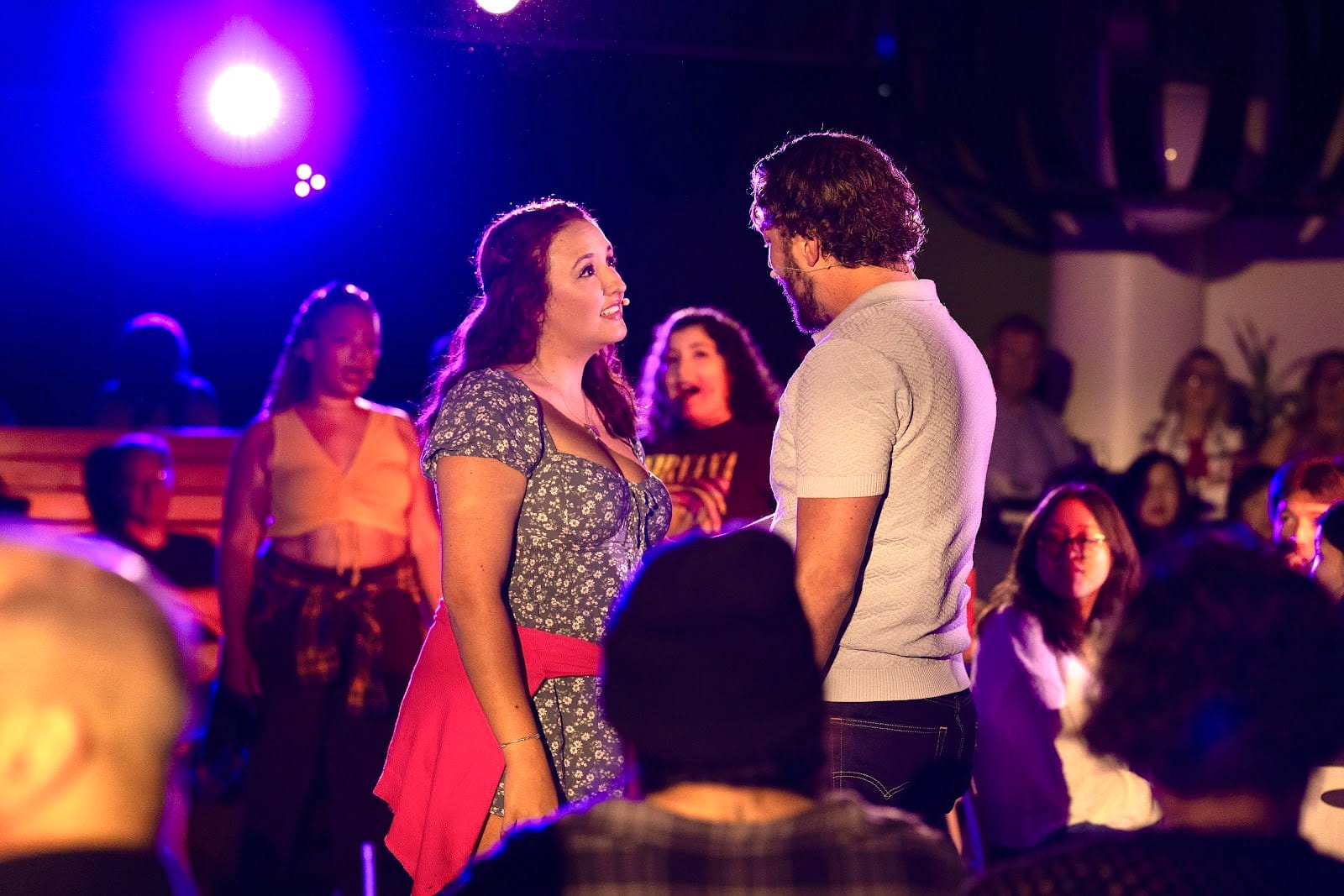
Here’s a little thing about me: as a rule, I don’t like musicals.
Of course, there are exceptions to this. I’ve never not enjoyed Sondheim. I also have a soft spot in my heart for at least the idea of jukebox musicals. The later comes, I suppose, from my absolute, unabashed love of karaoke.
So when I saw Karaoke Dreams on the WOW lineup I had to place a bet on whether the show would lean heavily on musical or on karaoke to determine if I would put it on my list.
That it was a production of Blindspot Collective, whose Hall Pass still sits high on my list of immersive shows — period — was the tiebreaker.
I regret to inform you that I bet wrong.
Here’s the thing: I don’t enjoy writing negative reviews. I’d rather spend time talking up the things I love. But it can be illustrative to write about a show that really misses the mark for a reviewer. It helps one’s own readers calibrate their own tastes against yours, for one. So apologies, Blindspot, but you’re catching strays tonight.
For starters, whether you will enjoy Karaoke Dreams hinges not on whether or not you like karaoke but on how you feel about medleys. You know, the thing where a number of songs are Frankensteined together in order to bend them to the design if the mad mash up artist behind said medley. I, if you can’t tell, fairly despise the practice. There is pretty much one medley I like in the whole world, and that’s the “Elephant Love Medley” in Moulin Rouge, the ultimate jukebox musical.
Sure, a well executed one can reveal threads in the culture that can only be revealed by juxtaposing compositions against each other. Or can act as a diagetic dialogue duel between two characters, aka the aforementioned “Elephant Love Medley.” (Reader, I think I need to rewatch Moulin Rouge. Luckily I have the DVD.)
On the other hand a poorly handled one can induce what I think I’ll call “sonic dysmorphia”: the act of twisting a song into something it isn’t because the lyrics superficially illustrate the point the book wants to make.
Karaoke Dreams has a rough ratio on this front, stemming in part from the fact that every musical number is a medley. Every. Single. One.
75 songs, according to the announcement from stage at the end of the show, were stripped for their parts and welded together to make the aural landscape for the production. But all that variety of material creates a paradox: every number feels the same because structurally it is the same:
Character is called up. Character starts a song. Lyrics on the screen. Some of the audience sings along. The company starts a chorus number, complete with a dance. Lyrics on screen blur. Song is replaced by a different song as the dance number becomes a backstory pantomime. The chorus takes over the heavy lifting of the singing. The soloist emerging a couple of times as the song selection skips around like a radio station’s music manager seeking a hit. Maybe a duet. Mostly the chorus, effectively a choir.
Lather. Rinse. Repeat.
I lost track of how many times.
This is all there is to the show, aside from quick banter from the KJ. I overhead an actor say this is a cut down version of the show. Maybe all the talky parts that make for a full story arc were cut in favor of a musical revue format.
For my money, though, the whole medley thing misses what makes karaoke special.
I suspect I know what the creators of the show are chasing: that moment when the karaoke bar suddenly switches from individuals trying their hand at belting tunes into a truly communal experience. One where people get up and start dancing. The dream of what karaoke can be.
Thing is, I’ve lived that dream. I’ve had that moment. At a karaoke bar in San Francisco in the aughts when the half dozen plus patrons got up on stage for a dance party while I sang Dexy’s Midnight Runners’ “Come On Eileen.” Why? How? The world may never know, but at least there’s photographic evidence.
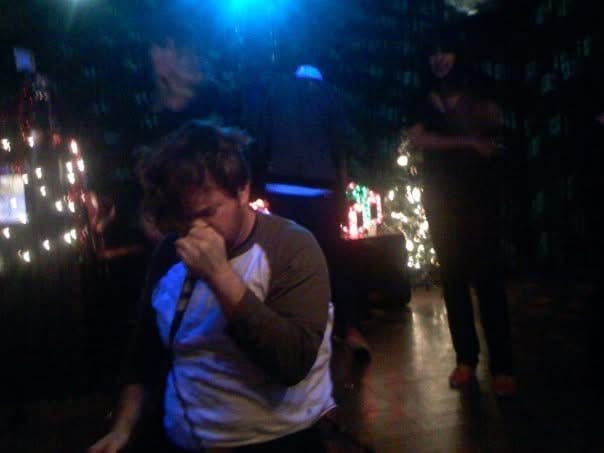
June 21, 2008: A night I'll never forget. No, I don't know that girl.
What’s beautiful about karaoke is when someone — or a few someone’s — put their soul into a song. When the singer and the song become one and this something new. It’s transcendent. Whether you’re doing it or watching it. And best of all since the lyrics are right there we can all follow along on their journey, anticipating the highs and the lows of the song in real time. Marveling when they hit them. Cringing with sympathy when they don’t.
The medley format affords none of that.
So I had a very hard time getting into the show. I could tell that a good number of people were into it. A few got up and left, but I stayed. There were some standout singers in the production, although the relentless chorus work seemed to be poised to swallow up anyone’s ability to shine. Still: talent blazes through, and when it did I stopped disassociating long enough to appreciate it. That and to sing a few bars of two of the greatest songs ever recorded: “Hey Jude” and “Thong Song.”
— Noah J. Nelson
Adult Puppet Cabaret – Animal Cracker Conspiracy
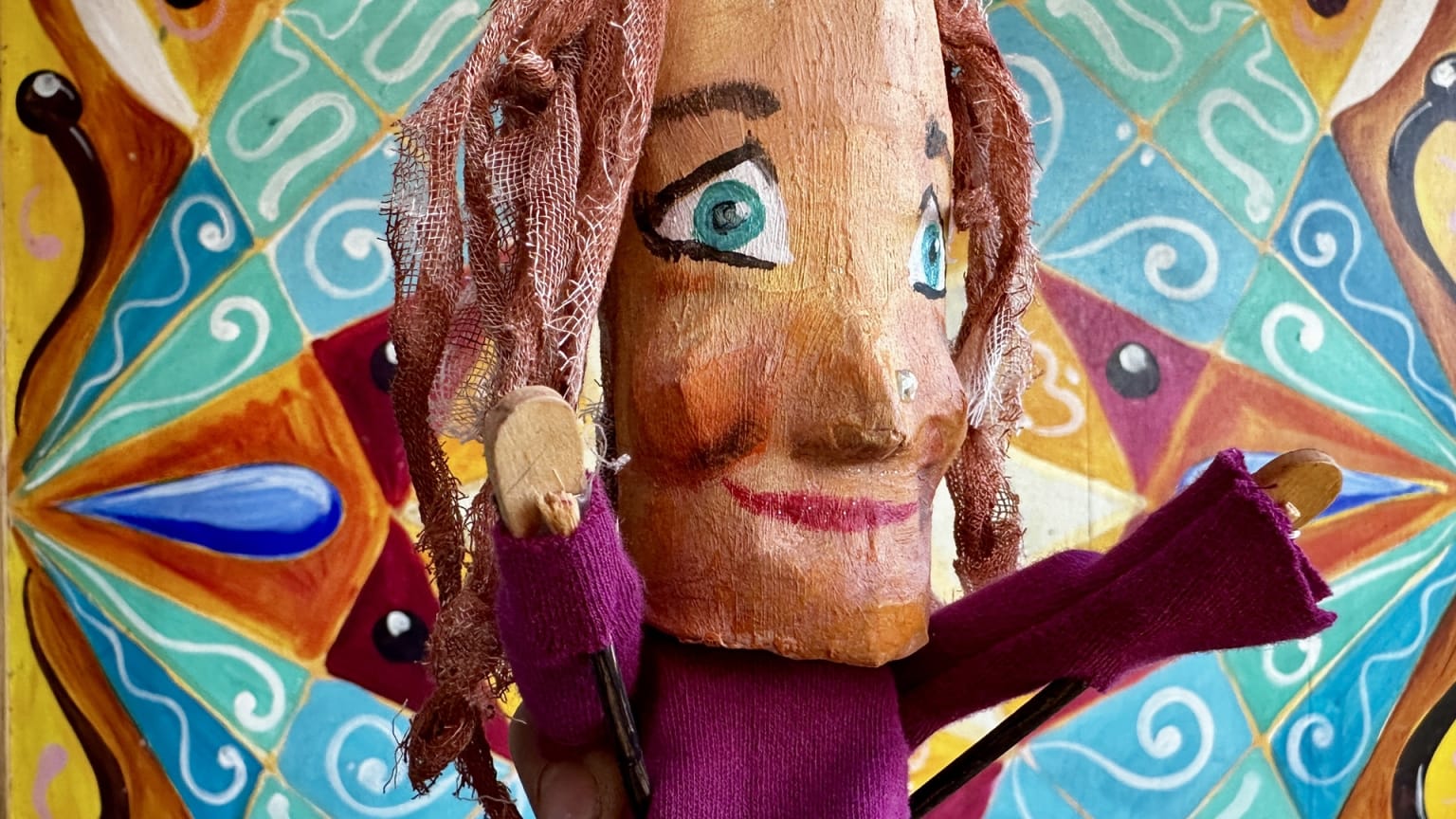
I don’t think of myself this way, but as it turns out I’m a sucker for a puppet show.
There’s something about it, and indeed all the various kinds of puppets, that I just find inherently charming.
Friday night’s edition of APC was the first time the show had been produced in a while — Animal Cracker Conspiracy slapped a “Revival” card on the stage with the “APC” marquee to drive home the point.
The format is, well, it is what it says on the tin: a cabaret show of puppet acts. Skewed to adult sensibilities. Although this was a lot more PG-13 than hard “R”, aside from going over the f-bomb count and a truly bawdy shadow puppet routine that kicked off the show on the first night.
A host of puppeteers from across Southern California and the southwest have come in to perform. Every routine had at least one highlight, and a few of them reached some real heights of absurdity.
Ironically one of my favorite moments came during a repurposed kid’s skit when the puppeteer broke the 4th wall to chastise us for being less participatory than the 7 year olds the routine is usually performed for. It was late in the show, and the crowd had lost some energy from the highs of the start when it was easy to get us all on our feet, but the being compared unfavorably to 7 year olds woke us all up and got us rowdy again.
There were also some pointed social commentary — a routine from San Diego’s Puppet Not Bombs about doomscrolling was damn near profound. No. Scratch that. It was profound. I’ll be thinking about it every time I doomscroll for some time to come I bet.
The show had pacing issues on its first night, which can be expected and easily forgiven with the expectation that they’ll iron out the kinks of transitioning from one vignette to another.
All in all: I could see this becoming a perennial late night addition to WOW.
— Noah J. Nelson
Again! Again! – Mister & Mischief, Tiffany Ogburn
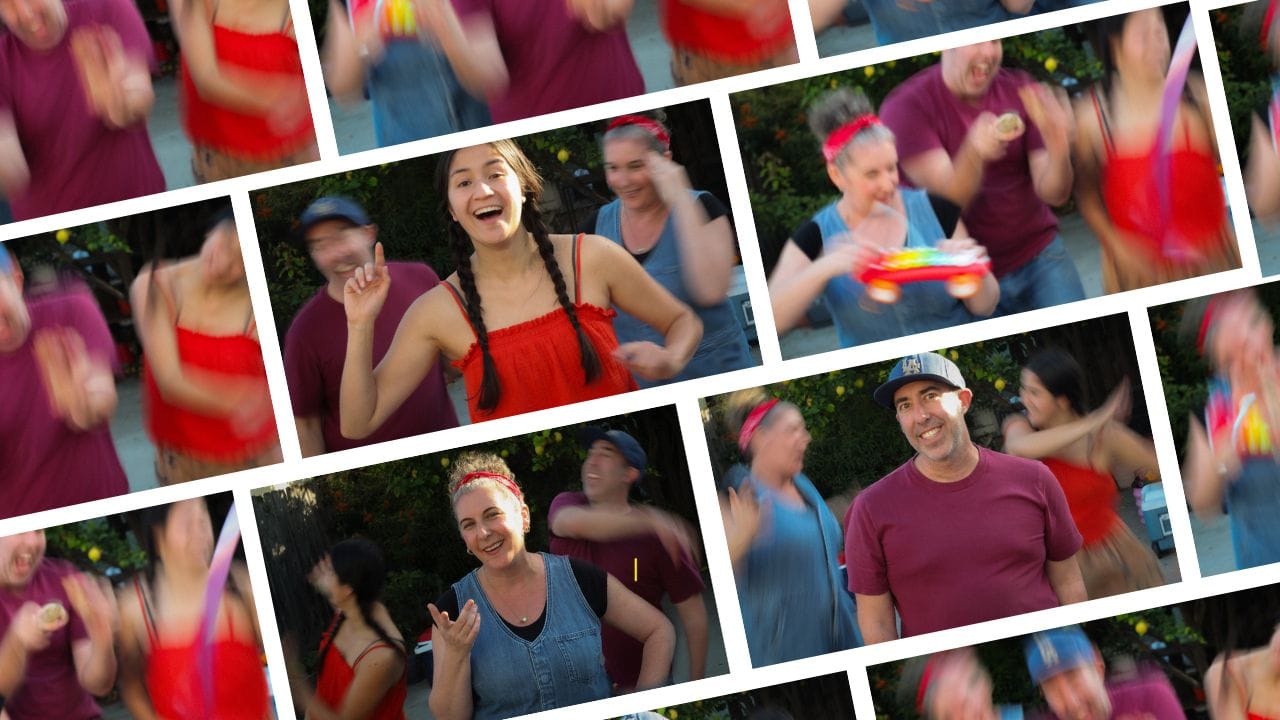
Mister and Mischief (Jeff and Andy Crocker, the duo behind beloved immersive experiences such as Escape From Godot and 40 Watts From Nowhere) have made their most personal and endearing project yet, in conjunction with collaborator Tiffany Ogburn (whose resume includes stints with Punchdrunk, Third Rail Projects, and Casa Bonita).
In Again! Again! all three play versions of themselves: Andy, a writer/director and mother; Jeff, a designer/producer and father; and Tiffany, a dancer/actor … who is also their babysitter. Oh, and they’re also all collaborating on a brand new creative project.
The show’s centerpiece is a custom wooden table located in the center of the room with a single central base. The only issue? This table is designed to wobble (imagine something comparable to a stability trainer you might find at the gym). The only way to keep the table level is by having at least one person steady it. More, naturally, is better. One person can do it, but it requires a lot more work. And they’re not always successful. After all, it can be hard to tell the difference between “leaning in” and falling down.
Yes, the team behind Again! Again! has created a literal manifestation of “work-life balance.” And now they need our help to keep everything from falling off the rails as we experience a day in the lives of the multi-tasking, multi-faceted, multi-talented Andy, Jeff, and Tiffany.
Cleverly, each participant being asked to interact during the performance is simply referred to as “Kiddo,” as we all become stand-ins for the youngest member of the family. The audience gets to flex all manner of physical or creative muscles as we are asked periodically to help steady the wobbly table, or take a beginner movement class, or narrate a nature video on YouTube, or fold socks and launch them into an empty laundry basket serving as a basketball hoop, or help Andy find her phone, which she is constantly losing. These interactions are often happening at the same time in different corners of the room as the performers disperse into the audience.
Despite the serious subject matter, this piece is not purely about drudgery. Again! Again! does emphasize the repetitive nature of this modern life, to be clear, but the treatment of it is also often hilarious, and strange, and witty, and tender, and joyous.
Ogburn, with a background in dance, improv, and clown, especially leans into the physical theatre aspects and manages to steal the show multiple times, particularly when eating plain spaghetti one strand at a time with her hands while pretending to be paying attention during a simulated Zoom call. Meanwhile, I thought I could hear a pin drop as two patrons who had brought a newborn fed their infant a bottle, while Jeff sang a lullaby at bedtime.
Echoing themes from other projects at this year’s Without Walls Festival — such as Jessica Creane’s quietly moving Tea Party At the End of the World and Ontroerend Goed’s hopeful and uplifting Handle with Care — care, too, is at the backbone of the Again! Again! experience. Here, it is not just about the obvious love and care between the three people at the heart of the show, but for everyone they care about and the people those people care about and the people those people care about.
And that’s just how it should be: care all the way down.
Saturday, April 25, 2026
[IMAGE DESCRIPTION] – Drew Petersen
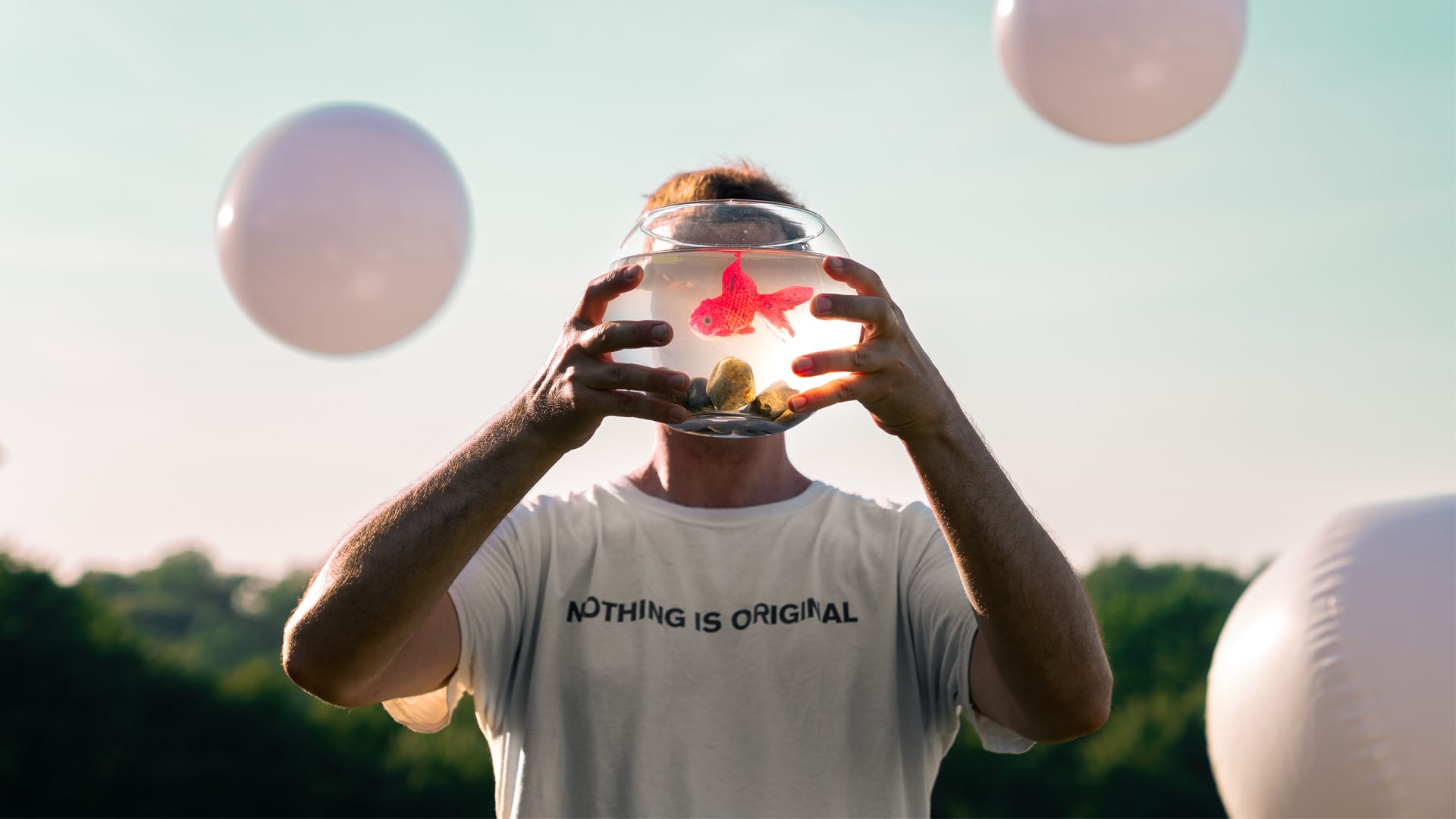
[IMAGE DESCRIPTION] is an interactive one-man show by Drew Petersen which takes the audience into a heartfelt story of two friends who meet by chance at a train station, hit it off, and – at some point in the future – walk into an art museum together, taking pictures along the way. The friendship ebbs and flows over an unknown period of time. But there are always pictures. Though, the pictures are not always quite what you’d expect.
What sounds like a simple story becomes a wistful meditation on the delicate nature of time and connection and growing apart and loss. It’s about what information is lost in the simple act of capturing a photograph, or what isn’t included when someone is describing an image. How the mind warps memories whenever they are accessed. And what happens when the pictures are all we have left. It’s a tricky subject to build a performance on, but Petersen pulls it off with tenderness and grace. The touching tale he builds with us may sound like the story of many relationships but Petersen’s sweet spot is in finding the tiny details which bring out the universality of the themes. And I’d bet good money that I wasn’t the only person wiping away tears by the end.
The audience is the collective stand-in for Petersen’s friend as their lives unfold. All participation is strictly opt-in. Whenever the performer flashes the ASL sign for help, those keen to help can raise their hands. And the audience isn’t asked to improvise, but, rather, fed the next prompt or line of dialogue when needed, making it a low stakes way of adding to the experience.
[IMAGE DESCRIPTION] shows us that the photograph is not the lived experience in the same way that the map is not the territory. Instead, Petersen likens the relationship to the twin parallel metal rods which make up a train track, running in parallel. Never crossing. Together but separate. And if we stop long enough to consider it, we can find beauty in the chasm between.
— Kathryn Yu
Message in a Bauble — Enemies of Time
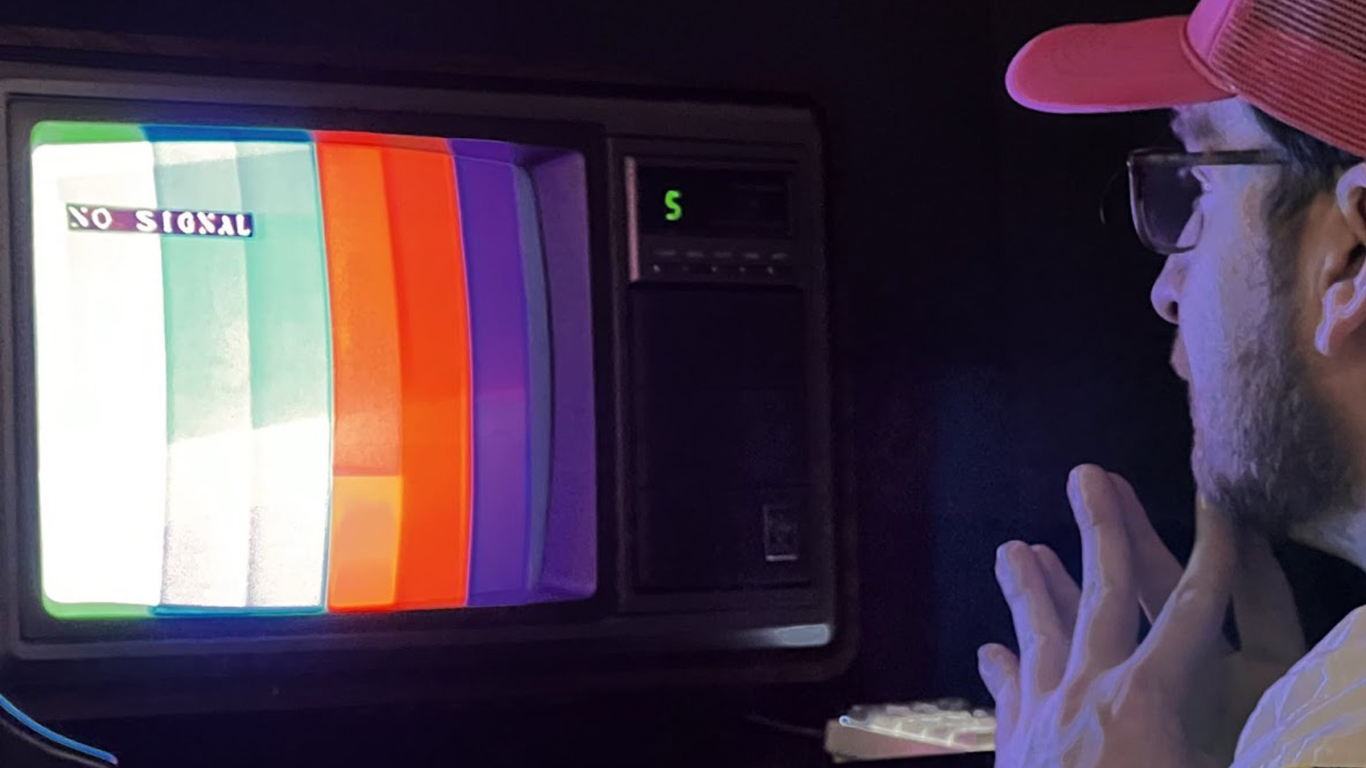
While it took me two attempts — thanks to technical glitches and some interface ambiguities — to get through the whole of this mini-ARG that starts with a capsule toy dispenser and leads to a story that unfolds over text, phone calls, and interactive elements.
The big highlight here is that the writing, performances, and original media of the piece are incredibly strong and make for a very fun half hour-ish run that — at least with the choices my small group made — ends with a fantastic story button. Who knew A.I. anxiety could also be fun?
This side of this was good enough to forgive an interface element at the tail end of the experience that seemed to stymie the audience and plague the creative team over the course of the weekend. I saw that particular element (I don’t want to give it away because I’m sure they will run this again) change forms pretty much daily as the team dealt with design and tech issues around it. That people powered through or picked back up after having to run off for another show – I saw that more than once – is a testament to how good the storytelling is.
With a bit of a more stable platform and some design tweaks on the interface for that particular gag, the Enemies will have a very palpable hit on their hands. One that can slot into all kinds of festivals.
— Noah J. Nelson
Jam Side Up — The Kif-Kif Sisters
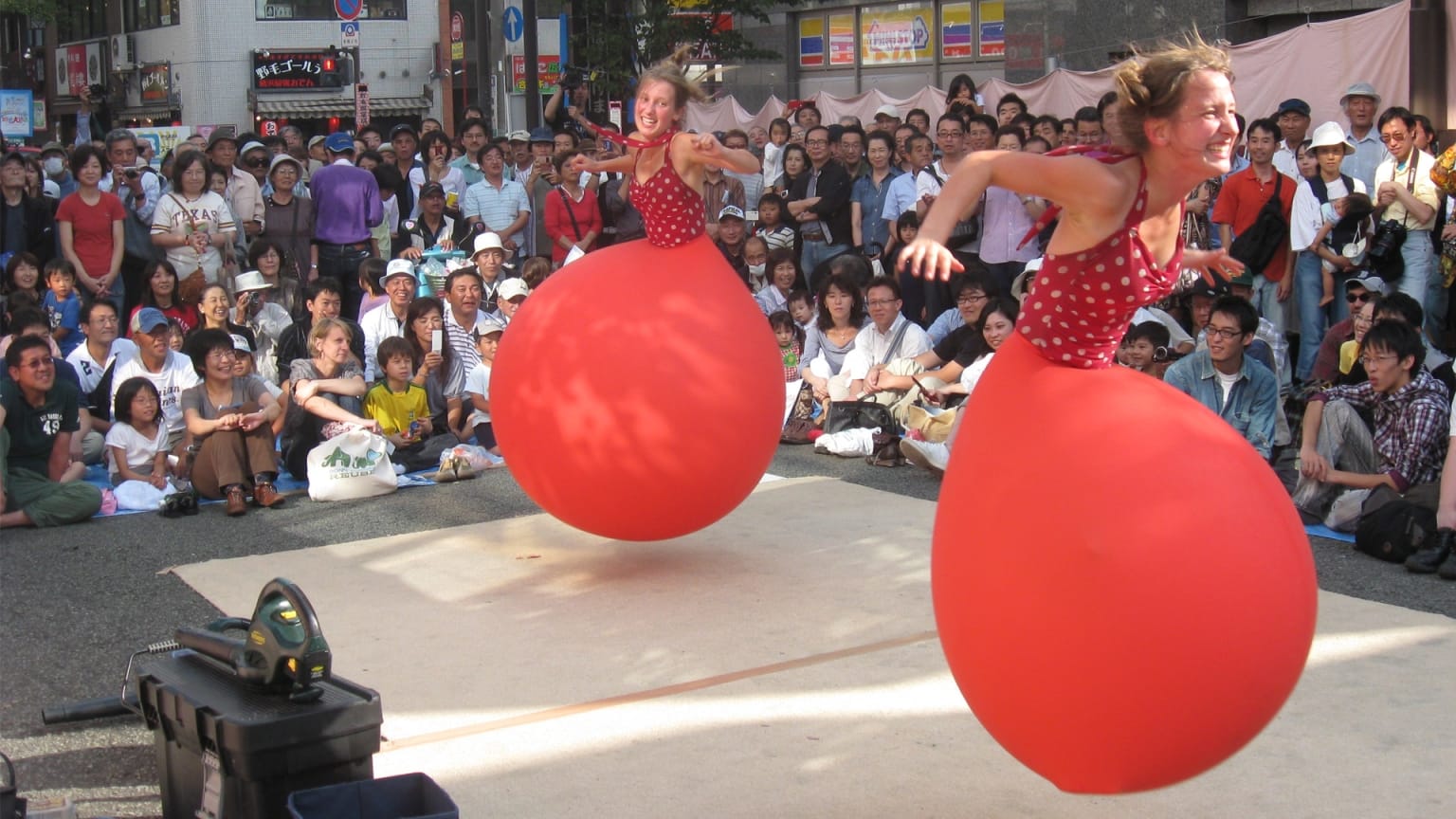
I don’t attend WOW for clown shows from Québec, but I am not above throughly enjoying them. Especially when they are as inventive as Jam Side Up from twin sisters Françoise and Josette Lépine.
Performed outdoor on the Warren Mall this was a delightfully anarchic series of sketches that started off absurd and got increasingly so.
The sisters played off their twin status in a delightful bit that encouraged parts of the crowd to cheer just for one or the other, and then put our powers of observation to the test as they essentially three card monte’d themselves in front of us.
But the heart of this was for the children in attendance, albeit with an innocently bawdy twist towards the end. (We’ll get there.) Multiple segments involved making a mess only to encourage the kids in attendance to clean it up with the aid of music and a countdown. After a few runs of this the sisters noted to the parents in attendance that the music was available if they’d like to use it (presumably at home, at chore time).
This peaked after the sisters blew up two large pink balloons and put little hats on them, making very distinct boob balloons which they then beachballed into to crowd. Each of the boobs was almost as large as the sisters themselves and far larger than most of the kids. But that didn’t stop one boy from running off with a boob, followed by a dozen and a half other kids of various sizes.
As they plunged further East on the Warren Mall a couple of parents finally awoke from whatever exhausted haze they exist in to realize they needed to chase down the kids lest they escape into a UCSD building with a giant boob. The days of helicopter parenting, it would seem, are over. The kids got far enough afield that Josette dispatched to chase down the balloon — I had spotted the twins with kids of their own earlier in the day, so this may have been a familiar exercise — and the whole troupe came careening back, overrunning a small picnic that our own Kathryn Yu was attempting to have on the grass of the mall. (Ed: I did spill my boba. – Kathryn)
No one was hurt, although I’m not sure the picnic survived unscathed.
The image of all those kids running feral is one of the funniest things I’ve seen in ages. So much so that even the kinetic final act couldn’t quite top it.
Sometimes what emerges is far grander than any plan.
— Noah J. Nelson
Suzik — Force
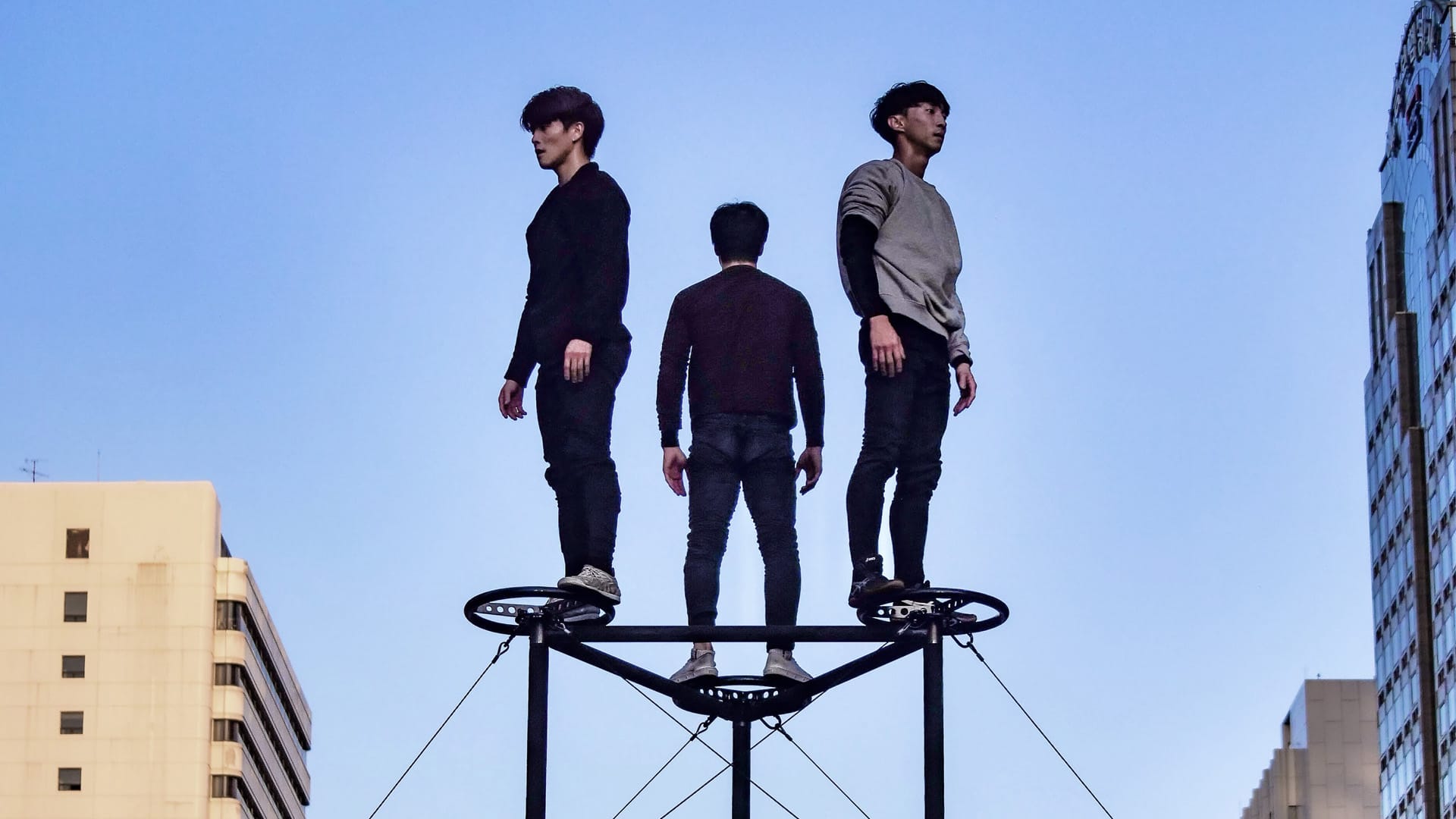
This spectacular, death defying act from Korea accomplishes the all-too-rare feet of telling a story through acrobatic motion.
Three performers attempt to reach the top of a towering apparatus, waylaid by gravity and each other in turns comedic and thrill inducing. They push and pull at each other, scramble up one of the three metal poles that make up the framework, and wind up in mock combat as they tumble on the hard surface of Warren Mall.
Sublimely kinetic, the trio that makes up Force TK are also incredibly expressive, with their struggle against both the tower and each other evoking the ways in which our personal ambitions clash with those of others and the seemingly impossible odds each and every one of us faces in this often merciless word.
And it all looks cool as fuck.
One doesn’t have to appreciate the tale that Force TK is weaving through choreography that wouldn’t be out of place at Cirque Du Soliel presents John Wick, but if you have the eyes to see it’s there. Which means the whole piece works on multiple levels.
If this, or anything these guys do, is anywhere near you make a beeline to see it.
– NJN
Tea Party at the End of the World — Jessica Creane
Disclosure: the following should not be read as a review. I consider creator Jessica Creane a friend, and a dear one at that. As a rule, I don’t review dear friend’s work. Too messy, for starters.
But this show, the first of hers I’ve seen despite knowing her for years now, wound up meaning a hell of a lot to me.
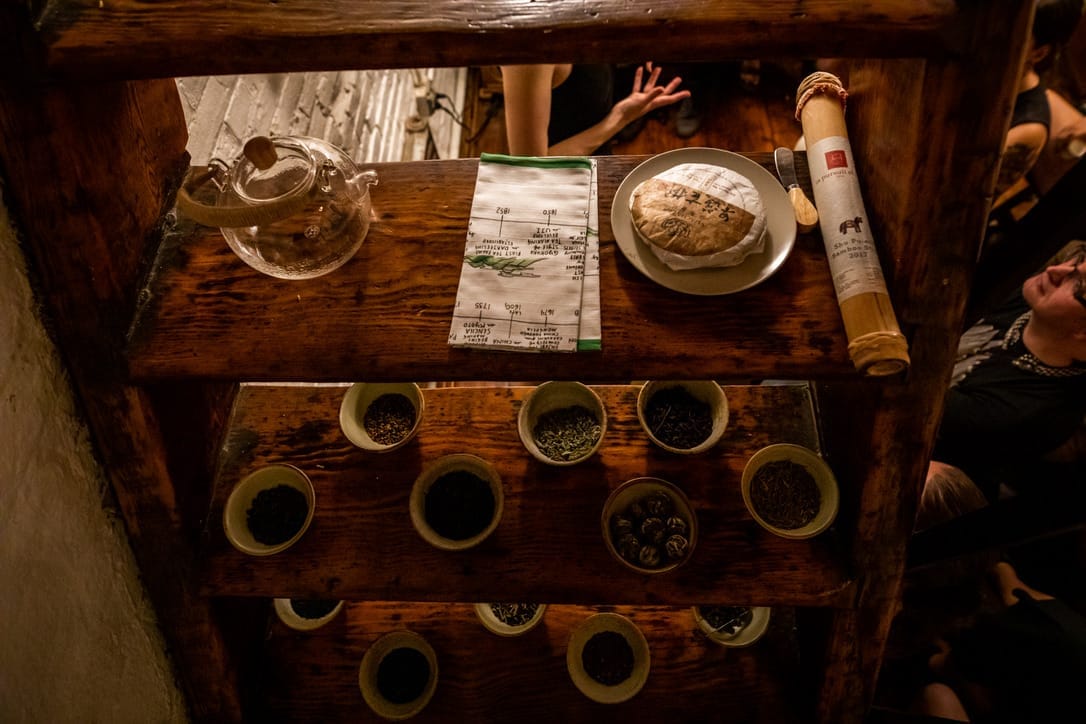
Tea Party at the End of the World is a number of things: a lesson on tea, a travelogue, and a mediation on mortality, for starters. But above all else it’s a kind of magical rite. Something bordering on the religious that does the very difficult thing of creating a collective moment that its audience colors in with meanings all their own that somehow whips around and makes it possible for us to feel together in struggles that for the most part feel so isolating.
The key to all this is Creane, who in offering up her vulnerability to the audience makes it possible for us to access our own. We are brought through the layers of the experience cup by cup as she brews tea and takes us through a series of toasts and stories, moments and memories. All of it adding up to a piece that feels less like a planned production and more like something that just happened to you.
It’s conceivable that some people don’t even think this is a show, but that somehow they put a witch in the rehearsal room and she conjured up a pocket dimension.
To be sure, though, this is a show. It is scripted, designed, and directed. All of it with a masterful amount of care from the subtle sound design which has more than one trick up its sleeve, to small pieces of choreography that give the sense of something surreal and sublime happening without ever going over the top.
I spent a good portion of Tea Party at the End of the World crying as feelings around grief and mortality were coaxed out by the piece. Not in the clunky way that too many immersive makers do —“Tell me about your biggest loss!” they blithely request, in a misguided attempt to make us care about their characters, getting the formula exactly backwards — but as a quiet substance steeping out of me between the ritualistic beats of the tea preparation and Creane — no —Jessica’s own sharing which seemed to emerge uncannily from organic interactions with other members of the audience.
People like to toss around the term “transformative” around experiential work, sometimes I think in the attempt to name a powerful aspect so that it can then be commodified. All while suggesting that these “transformative” experiences are somehow the next evolutionary step from the still emerging form we have now. It’s a branding that rings hollow from the start. Largely because all it is is branding, the actual practice of transformation — the art of change — being an alien language to those many who invoke it.
I didn’t feel transformed by Jessica’s work, but instead I felt revealed. Unveiled to myself while in the company of others who also needed this magick, and took to it as we do to breathing. She made space for us and gave us the tools to do the work, modeling how to do it along the way… and kept us all warm and in synch with each new brew.
If you should find that Tea Party at the End of the World is near you, I suggest you go. As a friend.
Next Up: DeepFake
Discover the latest immersive events, festivals, workshops, and more at our new site EVERYTHING IMMERSIVE, home of NoPro’s show listings.
NoPro is a labor of love made possible by our backers. Join them today and get access to our Newsletter and Discord!
In addition to the No Proscenium website and our podcast, and you can find NoPro on Bluesky, Facebook, LinkedIn, YouTube, Instagram, and in the Facebook community also named Everything Immersive.


Discussion